

Bitcoin’s Calmer Volatility Masks More Frequent Extreme Trading Days
A CoinDesk analysis identified 10 unusually large Bitcoin trading days in 2026, highlighting the limits of using broad volatility measures to assess risk.
By Chloe ·
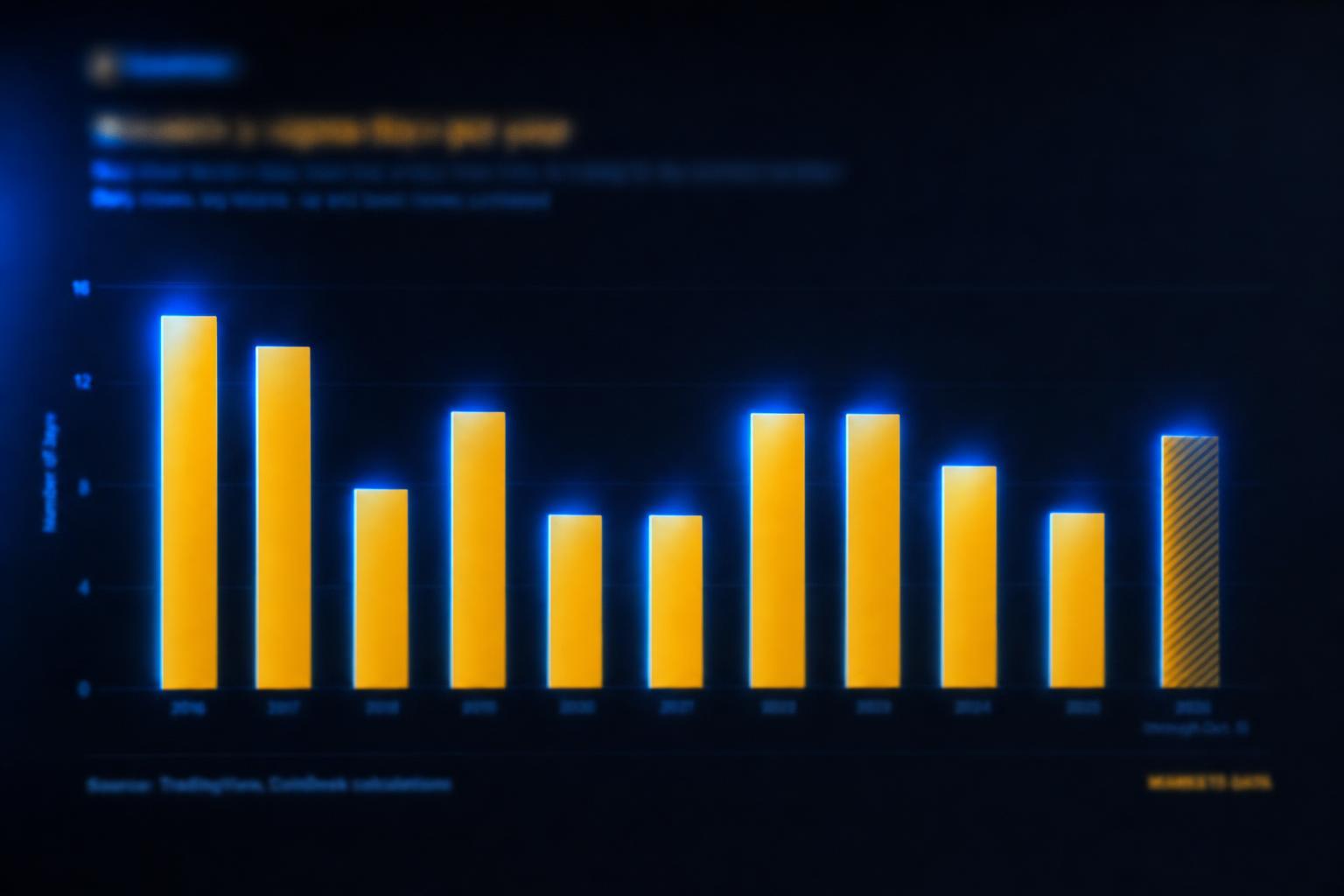
Bitcoin’s overall volatility has fallen sharply, but that calmer backdrop has not eliminated the possibility of abrupt market moves. An analysis identified 10 unusually large trading days in 2026, suggesting that extreme price action may be occurring more often than it did during the comparable period in 2018.
Averages do not tell the whole story
The contrast matters because volatility is often treated as a shorthand for market risk. When that measure declines, investors may interpret it as evidence that Bitcoin has become more stable. But an average volatility reading can conceal the size and frequency of individual trading-day moves, particularly when a small number of outsized sessions have a disproportionate impact on portfolios.
The 2026 count of 10 unusually large trading days puts that distinction at the center of the market discussion. Bitcoin can spend extended periods trading with fewer visible fluctuations while still producing sharp moves that challenge short-term positioning, risk limits and assumptions about liquidity.
Institutional markets, changing risk signals
The findings also raise questions about how risk should be measured as the crypto market becomes more institutional. Larger or more professional investors may rely on volatility indicators, historical comparisons and portfolio models when evaluating exposure. Those tools remain useful, but the analysis suggests they may not fully capture the risk created by occasional extreme sessions.
For Bitcoin investors, the comparison with 2018 is therefore less about declaring the market safer or riskier in absolute terms. It is about recognizing that lower broad volatility and more frequent extreme moves can exist at the same time. A market that appears quieter on average may still require close attention to the distribution of daily returns and to the potential impact of unusually large trading sessions.
The result is a more complicated picture of Bitcoin’s maturity. Its volatility has declined, yet the persistence of outsized trading days means that headline measures of calm should not be read as a complete description of market behavior.
Source: Coindesk